
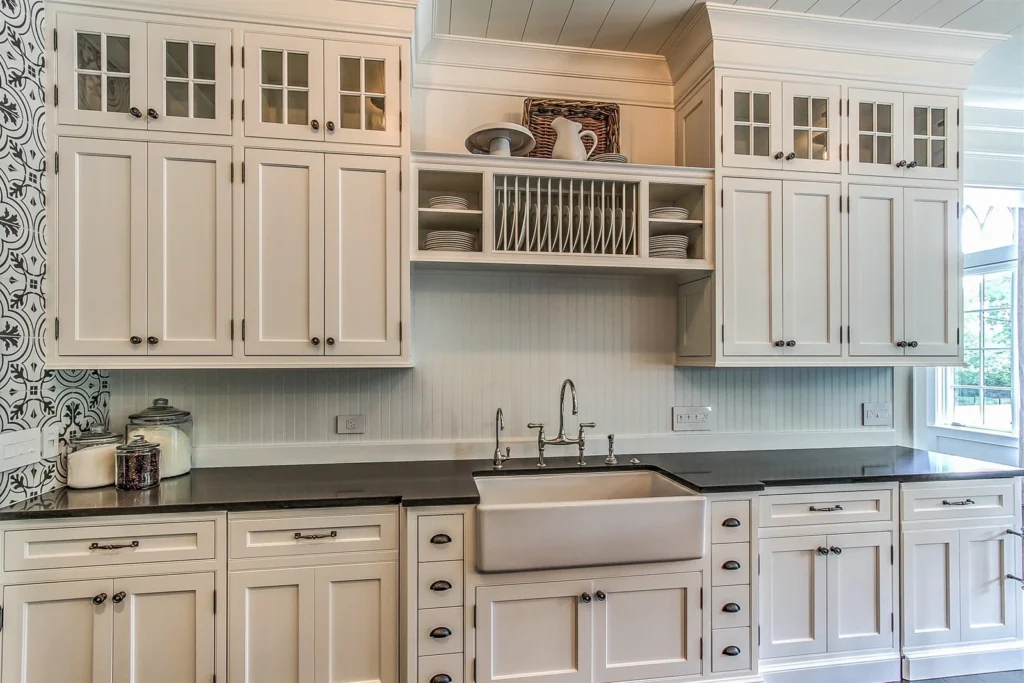
Cabinets set the tone for the whole kitchen. They’re the first thing you see when you walk in and the thing you touch most every day. So when they start to look tired, the room does too.
The good news is that worn or dated kitchen cabinets don’t always need to be torn out. Depending on their condition and the look you want, you can paint them, restain them, reface them, or replace them. Each option has its place. Here’s how to tell which one makes the most sense for your home.
Start by Checking What You Have
Before you choose a method, take a close look at your cabinets.
- Are the boxes solid? Open each door and check the cabinet frames and shelves. Sturdy wood boxes are worth keeping. Swollen, sagging, or water-damaged boxes usually aren’t.
- What are the doors made of? Solid wood and wood veneer can be sanded and refinished. Laminate and thermofoil are much harder to change.
- Does the layout work? If you love the layout, resurfacing can give you a fresh look for less. If the layout frustrates you every day, new finishes won’t fix that.
Your answers point you toward the right option.
Option 1: Painting or Refinishing
For many homes, painting is the most popular way to update kitchen cabinets. It can turn a dark or dated kitchen bright and modern without changing the layout.
If you’re wondering how to refinish kitchen cabinets well, the secret is preparation:
- Remove doors, drawers, and hardware, and label everything.
- Clean every surface thoroughly to remove grease.
- Sand lightly so the new finish can grip.
- Apply a bonding primer.
- Use a durable cabinet-grade paint, applied in thin, even coats.
- Let each coat cure fully before putting everything back.
Rushing any of these steps is what leads to chipping and peeling later. A spray finish usually looks smoother than brushing, which is one reason many homeowners hire a professional for this job.
Option 2: Restaining for a Natural Wood Look
If you love the look of real wood, restaining keeps the grain visible while changing the color.
So, how do you restain kitchen cabinets? The old finish has to come off first, usually by stripping or sanding down to bare wood. Then the new stain is applied, followed by a protective topcoat. It’s detailed work, and it only works on solid wood or real wood veneer.
Going darker is usually easier than going lighter. If you want a much lighter wood tone, painting or refacing may be the better route.
Option 3: Refacing
Refacing keeps your existing cabinet boxes but replaces the doors and drawer fronts and covers the visible frames with a new veneer. You get a whole new style, like moving from raised panels to clean shaker doors, without rebuilding the kitchen.
Refacing is a good middle ground when the boxes are solid but the doors are worn, damaged, or simply not your style.
Option 4: Replacing With Custom Cabinetry
Sometimes the best move is to start fresh. Replacement makes sense when:
- The cabinet boxes are damaged or poorly built
- You want to change the layout, add an island, or move appliances
- You need more storage than the current cabinets can give you
- You’re planning a larger kitchen remodel anyway
New custom cabinetry lets you design storage around how you actually cook and live, from pantry pull-outs to a built-in coffee bar.
Which Option Is Best for You?
Here’s a simple way to think about it:
| Your Situation | Best Option |
| Solid boxes, you want a new color | Painting or refinishing |
| Solid wood, you want a richer wood tone | Restaining |
| Solid boxes, you want a new door style | Refacing |
| Damaged boxes or a layout you dislike | Replacing |
When you’re thinking about how to redo kitchen cabinets, also think about how long you plan to stay in the home. A quick refresh can make sense before selling, while a long-term home may justify a more complete update.
Small Details That Make a Big Difference
Whichever route you choose, a few finishing touches can make updating kitchen cabinets feel complete:
- New hardware. Knobs and pulls change the character of a kitchen quickly.
- Crown molding. Adding molding to the top of cabinets makes them feel taller and more finished.
- Lighting. Under-cabinet lights brighten counters and show off the new finish.
- Interior organizers. Pull-out trays and dividers make everyday cabinets work harder.
When to Call a Professional
Painting or restaining a full kitchen takes time, patience, and the right tools. Refacing and replacement involve precise measuring and installation. If you want a factory-smooth finish, or your project goes beyond a surface refresh, it’s worth bringing in a team that does this work every day.
At Avondale Custom Homes, cabinetry and millwork are a big part of what we do, from gourmet kitchens and bars to built-in studies and ornate crown molding. The kitchen is most often the first area homeowners want to remodel, and the cabinets are usually where that starts. If you’re ready to explore new cabinetry or a larger kitchen update, see our cabinetry and millwork work or contact our team.
Frequently Asked Questions
What is the best way to resurface kitchen cabinets?
It depends on their condition. Paint or refinish solid cabinets for a new color, restain solid wood for a richer tone, reface for a new door style, or replace them if the boxes are damaged or the layout doesn’t work.
How do you restain kitchen cabinets?
Strip or sand the old finish down to bare wood, apply the new stain evenly, and finish with a protective topcoat. It works best on solid wood or real wood veneer.
Can laminate kitchen cabinets be refinished?
It’s difficult. Laminate and thermofoil don’t take paint or stain well, so refacing or replacing is usually the better choice.
Is it better to paint or replace kitchen cabinets?
If the boxes are solid and you like the layout, painting is a smart, lower-cost update. If the boxes are damaged or the layout doesn’t work, replacement is the better long-term investment.
Your cabinets don’t have to stay the way they are. With the right approach, they can feel brand new and make the whole kitchen feel like a different room.