
A bathroom looks like a small room on paper. Then demolition starts, and you see how much is packed into it: plumbing, wiring, ventilation, waterproofing, tile, glass, cabinetry, and fixtures, all fitting into a few square feet.
So how long does it take to do a bathroom renovation? The honest answer is that it depends on the size of the room, whether the layout changes, and the materials you pick. For a real example, one Avondale Custom Homes project, a modern bedroom and bathroom interior of about 900 square feet, was completed in five weeks. Your own timeline will come from your plan, and a good builder will walk you through it before work starts.
Here’s what happens at each stage, in order, so you can see where the time goes.
Stage 1: Design and Selections
Most of the schedule is decided before anyone picks up a hammer. This is when you settle the layout, vanity, tub or shower, lighting, and finishes. A few choices have a big effect on timing.
Shower style. A custom tiled shower takes more days than a prefabricated unit, because each layer (waterproofing, tile, grout, sealing) needs its own time. A walk-in shower kit can be quicker to install, though many homeowners still prefer the look and flexibility of tile.
Walls in the shower. Your shower wall material shapes both the look and the schedule. Large-format porcelain, natural stone, and solid surface panels all install differently. Stone may need to be templated and cut, which adds lead time.
Special-order items. Custom vanities, imported tile, and specific fixtures can take a while to arrive. Ordering early is the easiest way to avoid gaps once construction starts.
Permits are also handled in this phase when the work calls for them. How long that takes depends on your community.
Stage 2: Demolition and Discovery
The old bathroom comes out: tile, fixtures, vanity, and sometimes walls down to the studs. The rest of the house is protected, and debris is hauled away.
This is also when surprises show up. Water damage behind a tub, a subfloor that needs repair, or wiring that isn’t up to current code. Finding these early is why a small cushion in both the budget and the schedule makes sense.
Stage 3: Rough Plumbing, Electrical, and Framing
With the room open, plumbing lines are moved or replaced, drains are set for the new shower, and electrical work goes in for lighting, outlets, heated floors, or a new exhaust fan. If the layout is changing, framing happens now too, like building a shower niche or bench.
In many communities, this rough work is inspected before the walls are closed. That inspection is a fixed point in the schedule, so it helps when your builder plans around it.
Stage 4: Walls, Waterproofing, and Prep
Backer board goes up in wet areas, drywall goes up everywhere else, and the shower gets its waterproofing layer. It isn’t exciting to look at, but it’s one of the most important steps in the whole project. Good waterproofing is what keeps a beautiful shower from turning into a problem a few years later.
Stage 5: Tile and Surfaces
The title is detailed, careful work. Floors, shower walls, and accent areas are set, then grouted and sealed. Larger tiles, detailed patterns, and natural stone take more time than simple layouts. If you choose panels or a kit instead of tile, this stage can move faster.
The drywall in dry areas is finished and painted during this window as well.
Stage 6: Vanity, Fixtures, and Glass
The vanity and countertop go in, followed by sinks, faucets, the toilet, lighting, mirrors, and accessories. Shower glass is usually measured after tile is done, since it has to fit the finished opening exactly. It’s then made to size and installed, and that wait is a common reason the last stretch runs a little long.
Stage 7: Final Inspection, Punch List, and Cleanup
Final inspections are completed where required. Then comes the punch list: paint touch-ups, caulk lines, adjusting doors and hardware, and checking that every fixture works the way it should. After a thorough cleaning, the room is ready to use.
What Can Make a Bathroom Remodel Take Longer
- Moving the toilet, shower, or tub to a new spot
- Changing decisions after construction starts
- Backordered or late materials
- Hidden damage found during demolition
- Complex tile patterns or natural stone
- Permit and inspection timing
How to Keep Your Project on Schedule
Make your selections before work begins, from tile and fixtures to your shower wall material. Ask for a written schedule, so you know what happens and when. And work with a team that handles design and construction together, so the plan is checked against cost and timing before demolition day.
If you’re searching for a remodelling contractor near me, look for a home renovation company that walks you through the full timeline up front, not just the start date.
How Avondale Custom Homes Handles Remodels
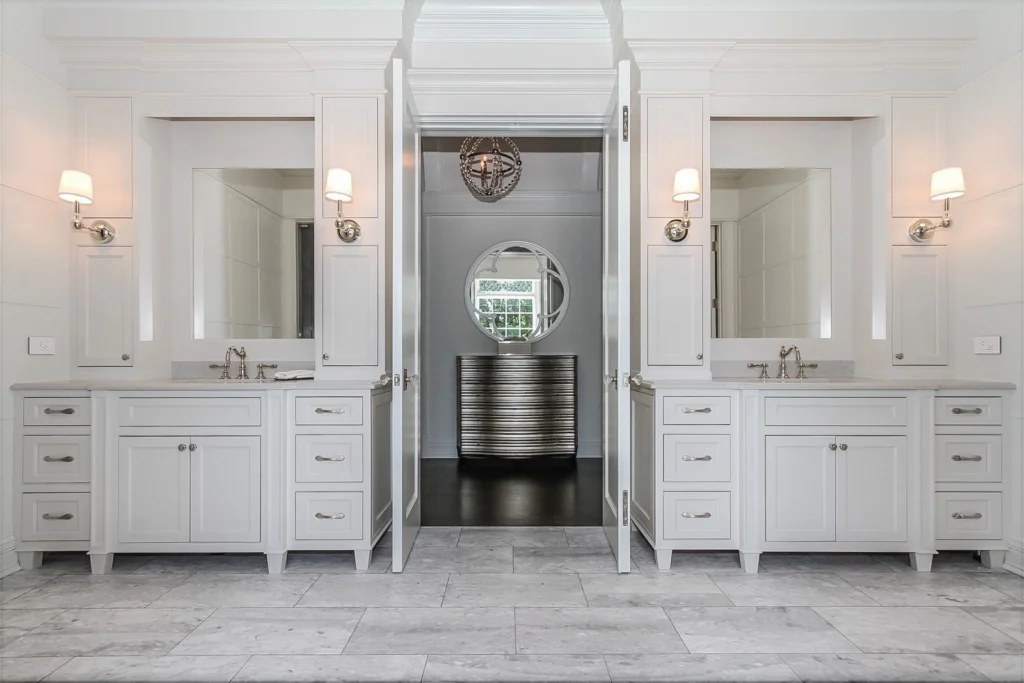
In the bed and bath project mentioned above, the bathroom was planned around efficient use of space, with fixtures chosen for everyday use and long-term performance, and built-in storage to keep clutter out of sight.
Avondale Custom Homes is an award-winning design-build team based in St. Charles, serving Chicagoland since 1992. Our remodels follow four steps: an initial consultation to define your needs, goals, budget, and expectations; design and planning to create layouts and choose materials; construction with close attention to quality and timeline; and a final review and handover. Explore our remodeling services or start with a conversation.
Frequently Asked Questions
How long does it take to do a bathroom renovation?
It depends on the size of the bathroom, layout changes, materials, and permits. As one example, an Avondale bed and bath project of about 900 square feet was completed in five weeks. Ask your builder for a written timeline based on your plan.
Is a walk-in shower kit faster than a tiled shower?
Usually, yes. A walk-in shower kit skips much of the tile setting and curing time. A tiled shower takes longer but offers more design choices.
What should I think about when choosing a shower wall material?
Look at durability, cleaning, and how it fits your design. Porcelain, natural stone, and solid surface panels are common options, and each has a different install time.
Can I use the bathroom during the remodel?
No. Once demolition starts, the room is out of service until the work is complete, so plan to use another bathroom in the meantime.
A bathroom remodel takes some patience, but a clear plan makes the whole process much smoother. Make your choices early, expect a surprise or two, and work with a team that keeps you informed from start to finish.